February 19, 2026
For all the good news, Democrats are at a dangerous moment politically.
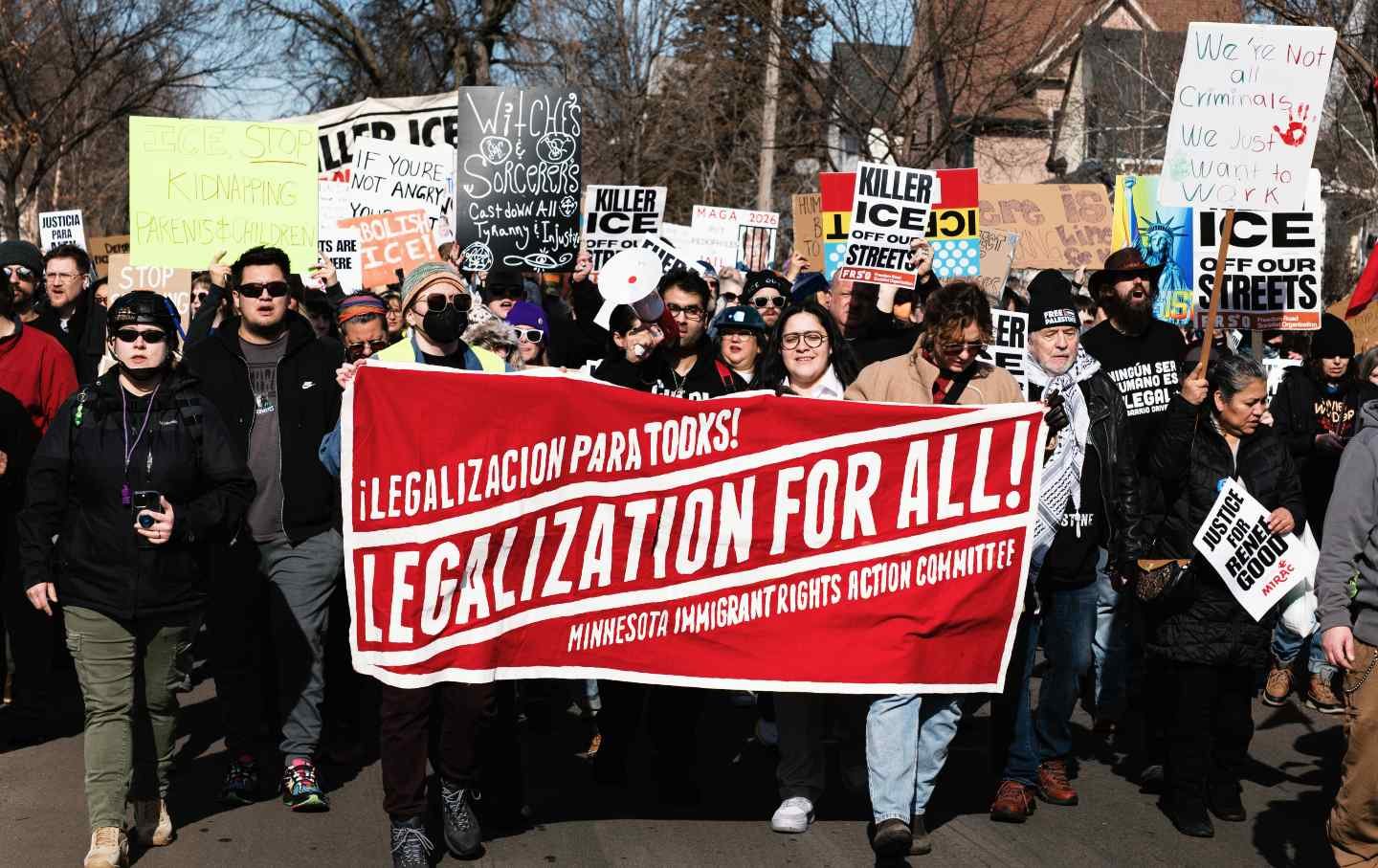
The inspiring victory won in the streets of Minneapolis gives Democrats an opening for a realignment of American politics, but only if we build a bridge to working-class voters conflicted on immigration, based on the populist economic issue driving their anger right now: the abuse of corporate power. We must show people that the same government that is terrorizing people in cities like Minneapolis is also allowing big business to abuse its power to make life tougher for all working families.
The combination of wages’ not rising fast enough plus the inflation of recent years has hit working families very hard. These voters have not liked the excesses of ICE, so we have an opening with them on immigration, but it will never be their main issue. Economic struggles will always be the first order of business for most working-class voters.
Right now, the political dynamic favors the Democrats. Republicans are no longer winning the immigration debate, and the economy is hurting them because they are the party in power.
The problem is that Trump is moving fast to develop and promote his own populist-sounding affordability agenda, including proposals to cap credit-card interest rates at 10 percent; prohibit large corporate investors from buying up single-family homes; and slash the cost of prescription drugs.
The Danger Ahead
For all the good news, Democrats are at a dangerous moment politically. On a high from winning the 2025 elections so decisively and seeing Trump’s numbers tanking, much of the party leadership believes they can glide into a 2026 election victory by simply attacking Trump and repeating the word affordability. But Trump’s team is politically flexible enough to craft a populist-sounding affordability package that—rhetorically, if not substantively—borrows key elements of the Elizabeth Warren and Zohran Mamdani agenda.
Current Issue

It is no accident that Trump has surprised observers by recently saying favorable things about both Warren and Mamdani. Even his rejection of popular healthcare subsidies long supported by Democrats has been framed with a populist twist, attacking “subsidies” as handouts to greedy insurance companies.
At this moment in time, Donald Trump is sounding more like a progressive economic populist than many Democrats. If that perception holds—if he succeeds in rebranding himself as more of a fighter against big business than the Democratic Party—then Democrats may eke out a smaller-than-expected victory in 2026 but will face serious danger in 2028. They will also have squandered their best opportunity since 2008 to produce a genuine political realignment.
The Populist Moment We Live In
Ihave never seen a political environment as intensely populist as this one.
Part of this dynamic is that people feel increasingly hard-pressed. When my organization began Factory Towns polling in 2021, respondents were asked whether they or an immediate family member had recently experienced hardships such as job loss, health problems or coverage loss, medical bankruptcy, retirement income loss, foreclosure, or eviction. More than half answered yes to more than half of these questions.
A recent poll by GQR and the Century Foundation showed that life remains difficult for working-class voters and that their first instinct is to blame corporate CEOs, corporate power, and corporate greed.
Another poll that Lake Research and I conducted for the antitrust trial bar in late 2024 revealed exceptionally strong populist, anti-corporate-power sentiment. Voters strongly opposed corporate monopolies and expressed support for politicians advocating vigorous enforcement of antitrust law.
Working-Class Voters and Realignment
Recent private polling on working-class voters and immigration echoes these findings. While some voters remain sympathetic to Trump on immigration, many are deeply populist and strongly opposed to concentrated corporate power. This pattern is particularly evident among working-class men, both Latino and white.
These voters are highly skeptical of both major parties. A Manhattan Institute study identified “New Entrant Republicans” who diverge sharply from traditional party orthodoxy:
Younger, more racially diverse, and more likely to have voted for Democratic candidates in the recent past, this group diverges sharply from the party’s core. They are more likely, often substantially more likely, to hold progressive views across nearly every major policy domain. They are more supportive of left-leaning economic policies…
Many populist voters have supported both Trump and anti-establishment Democrats or independents such as Bernie Sanders, Dan Osborn, and Mamdani. In New York City, approximately 10 percent of Trump voters supported Mamdani—sufficient to affect close elections.
In addition to strong anti-corporate sentiment, these voters are highly pro-union. One Fair Wage polling has shown broad support for a $25 minimum wage.
These voters were central to the Factory Towns Project.
Donald Trump recognizes this electorate and is adjusting rhetorically toward economic populism. Many Democrats, by contrast, remain hesitant to define themselves as working-class-oriented, anti-corporate populists.
What an Affordability Agenda Could Look Like
There are three major pathways Democrats could pursue on affordability.
First, government could directly subsidize or fund more services. While popular in specific domains, swing and middle-income voters often remain wary of large-scale expansion.
Second, Democrats should emphasize raising wages and strengthening unions. Workers understand that wage stagnation remains central to their struggles.
Popular
“swipe left below to view more authors”Swipe →
Third—and most critically—Democrats must address corporate concentration. Voters already recognize that monopoly power drives price increases. From groceries and housing to healthcare, corporate consolidation shapes everyday economic pressures.
Yet many Democratic leaders resist a full embrace of anti-corporate populism, fearing its effects on campaign finance. However, public demand for such policies would likely prove politically powerful.
Highest Possible Stakes
Government policy is not the only threat to working families. Corporate practices—from wage suppression to price gouging—compound economic insecurity.
If Trump succeeds in positioning himself as the primary anti-corporate populist while Democrats avoid confronting corporate power, the long-term consequences for democratic governance could be severe.
Democrats remain far more credible messengers on corporate accountability than Trump, whose record reflects favoritism toward concentrated wealth and corporate interests.
The moment to decide is now.
More from The Nation
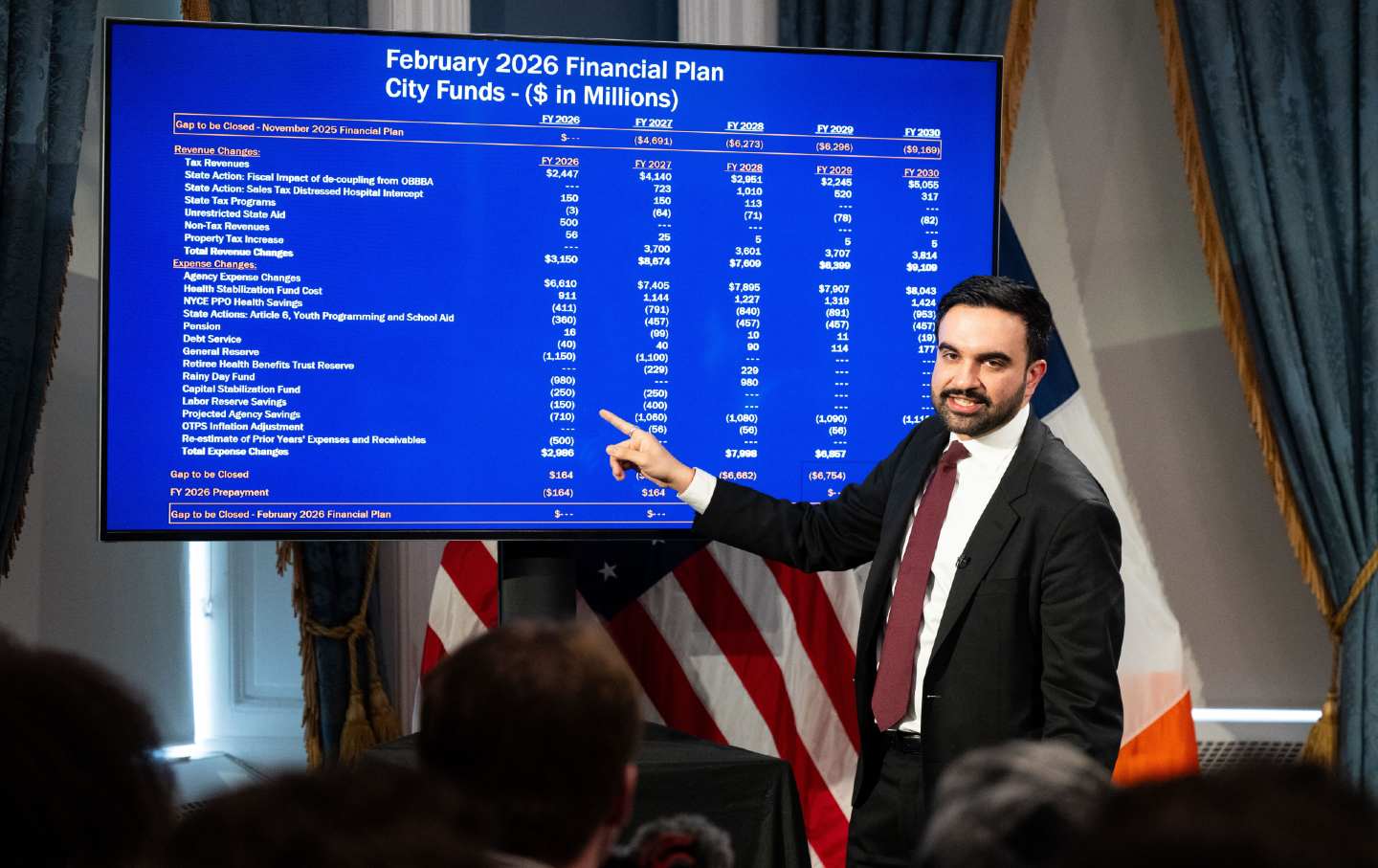
The mayor, the governor, and the members of the city’s big-ticket tax base are all squaring off over prospective tax increases and service cuts.
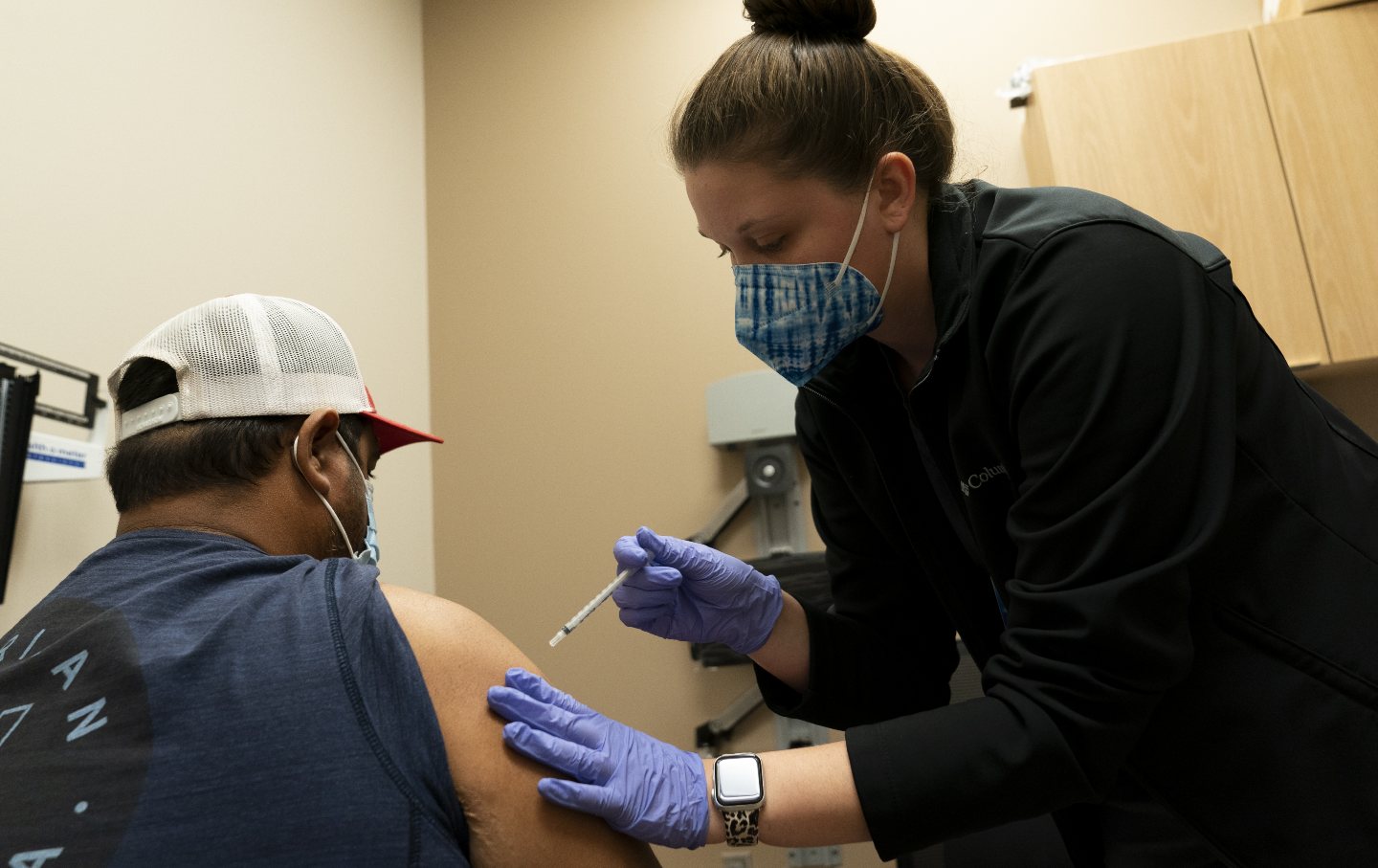
As Trump continues to dismantle federal agencies, this state shows what happens when a one-party-controlled government makes sweeping public health changes with little resistance….

Widespread unrest as crackdown intensifies, leaving thousands dead.
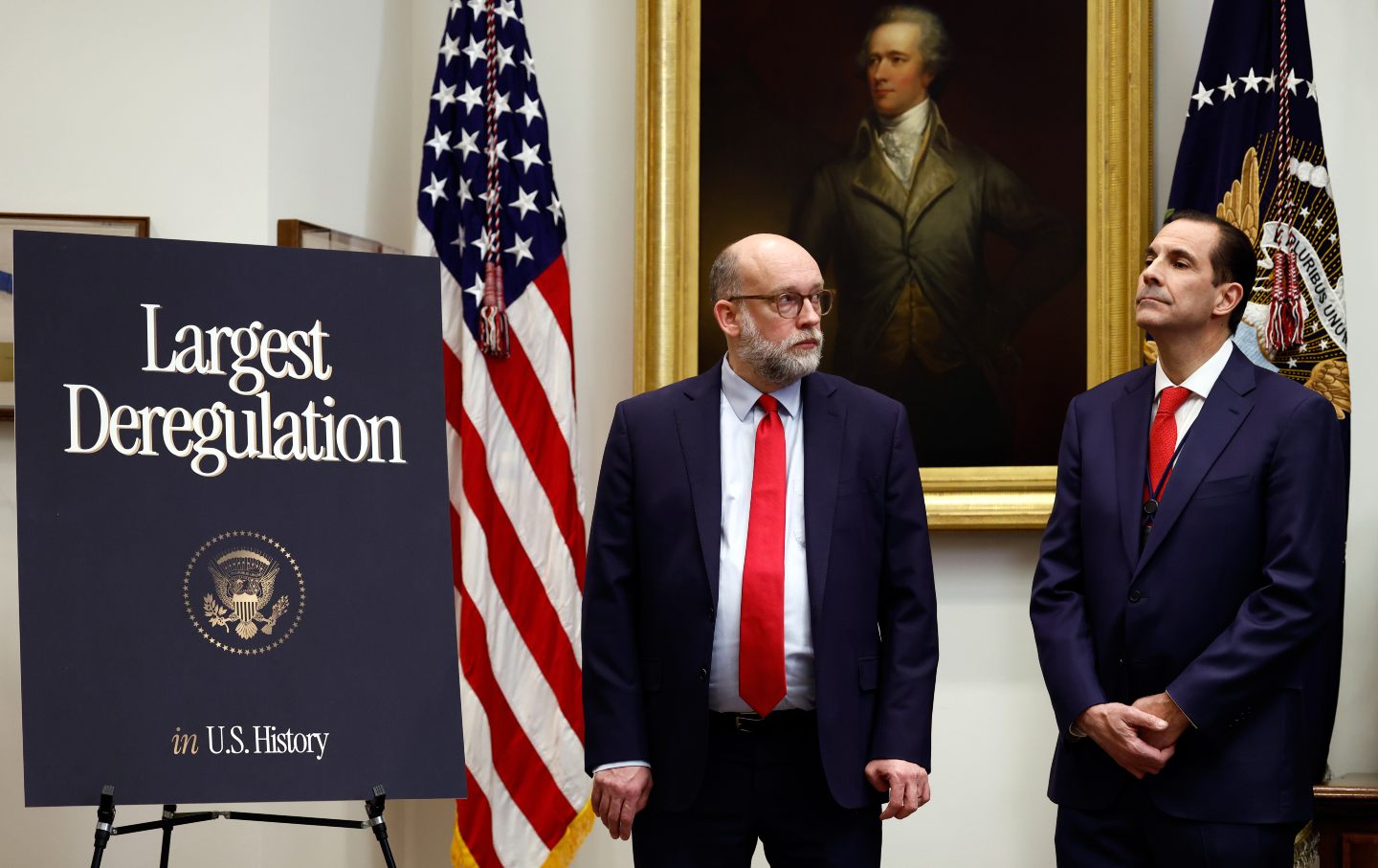
America should build things again, and we the people should own what we build.
