
January 30, 2026
A New York Republican club hosted a seminar dwelling on vigilante fantasies in one of the nation’s safest cities.
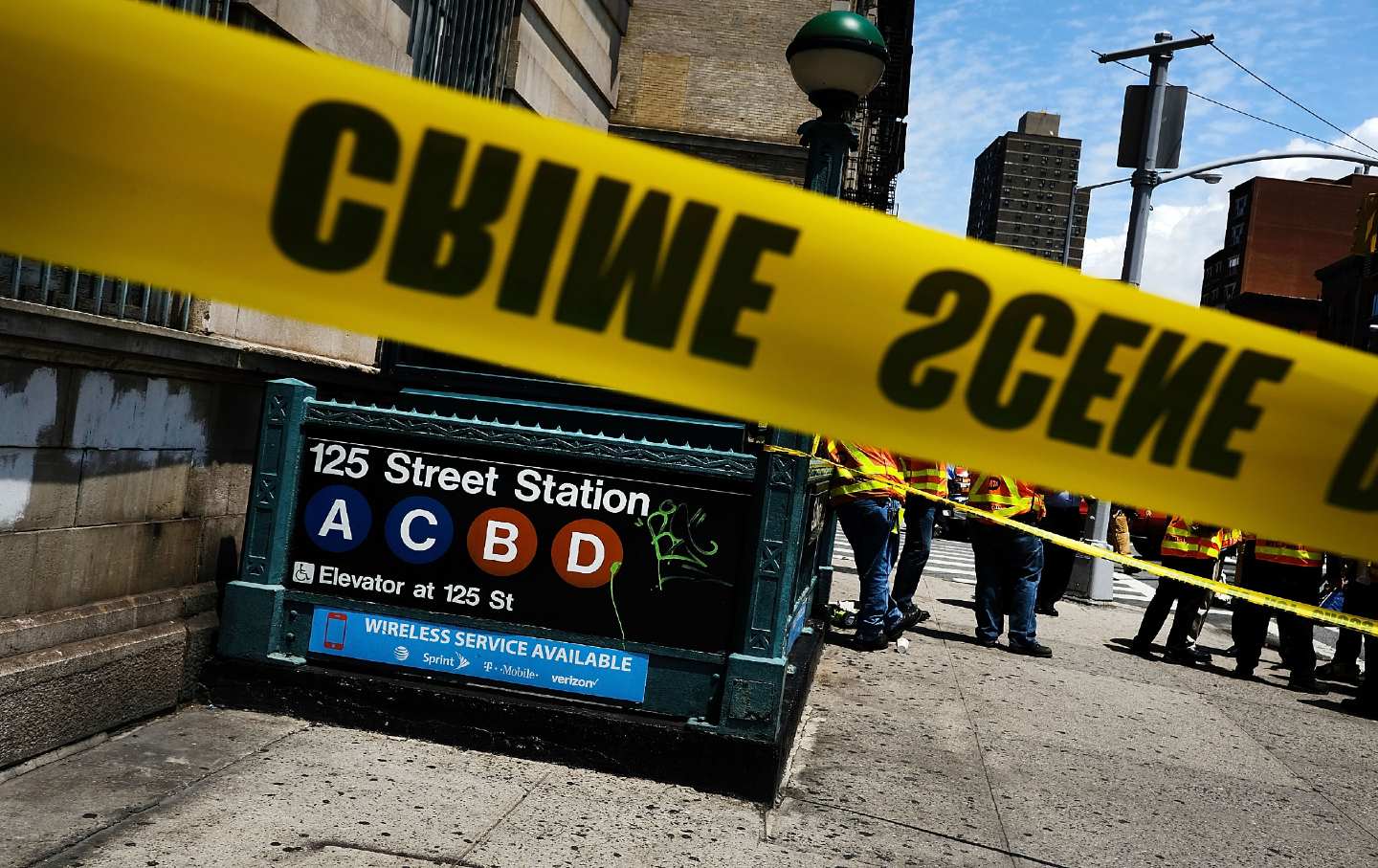
The scene outside a 2017 subway derailment in New York.
(Spencer Platt / Getty Images)
On a recent freezing night in Manhattan, visiting a historic Upper East Side townhouse, I plopped into a folding chair near a massive American flag and drank Cherry Coke from a red plastic cup as a retired FBI agent explained why he preferred to sit in a restaurant near the kitchen facing the front door. According to a mailer advertising his appearance, the former agent, Rob Chadwick, was here to educate an audience at the Metropolitan Republican Club, one of the city’s oldest conservative associations, about “the spread of ANTIFA-style political violence from Portland to NYC.”
The recent violence in Minnesota, where ICE officers killed two protesters in widely filmed tragedies whose conditions the federal government repeatedly lied about, was in the air—but mostly in the abstract. A Metropolitan Republican Club official who introduced Chadwick complained of “coordinated attacks” against federal law enforcement in Minnesota. The ad for Chadwick’s talk promised he would address “the escalating wave of targeted political intimidation and terror.”
It turns out, according to the narrative favored by elderly Manhattan Republicans and retired FBI agents turned personal security gurus, that any wave of political terror that might be roiling America is mostly targeted at Republicans and people who use deadly force to defend themselves.
“Ask the ICE agents we’ve seen on TV. Their life is over,” said Chadwick, without mentioning that some of these agents had in fact killed people—eight in the last month alone, who died either by shooting or while in immigration custody. “These are human beings who want to go home to their families.”
Chadwick held a variety of roles with the Bureau before retiring and transitioning to a career lecturing the lay public about personal security while acting as an adviser to the US Concealed Carry Association. (The relative strictness of New York’s gun laws was a recurrent complaint from Chadwick and audience members.) Now he was standing at a lectern in a building where conservative New York politicos had convened for decades, teaching the audience the same skills he had taught members of FBI SWAT teams. “I want you to think about tonight as your training,” said Chadwick. It was mostly about mindset, he explained—a means of developing a bias for action when the next mass shooter could be just around the corner.
An audience member asked about Daniel Penny, the subway vigilante who strangled Jordan Neely to death before being found innocent of all charges and moving on to a career in venture capital. “Nineteen months they tortured that hero,” an elderly man said to rumbles of agreement from the room.
Current Issue

Another man, leaning on a cane, described an assault he had suffered 23 years earlier, in which he had fought back. “He didn’t make it,” he said. But if the attacker had survived, the questioner wondered, “could he sue me?”
There was a shared sense that the world had gotten irremediably more dangerous in recent years, especially in New York and other big cities. “We’ll make it through this,” said the club’s president before Chadwick’s talk. “We’ll make it through Mamdani.”
“Unfortunately, you guys live in a very dangerous city,” said Chadwick, referring what is, by some statistical measures, the safest big city in the United States, where violent crime in particular has been on the decline for years. (Nationwide, meanwhile, murder rates are at their lowest point in more than a century.)
Someone asked how to be safe on New York City’s crowded streets. “Crowds are very dangerous,” said Chadwick, before encouraging people to have an established “rally point” with friends if they go to a protest or ballgame and find they have to flee.
An elderly woman asked about how to stay safe on mass transit. “Mass transit is extremely dangerous,” said Chadwick, the author of a book called The Practical Guide to Personal Security, which one could order by scanning a QR code on a tablet on a merch table. He said that whenever he went on the subway, he walked around the subway car and scoped out the passengers. If he didn’t like what he saw, he got off the train to catch another one that didn’t trigger his Spidey sense. He explained further that he applied a similar heuristic practically every time he was in public—for example, describing the safest time and place to get gas (daytime, massive gas stations doing steady business, when your tank is half full).
It was essential, Chadwick repeatedly emphasized, to trust one’s intuition. Be sure to put “time and distance” between yourself and a potential attacker, he said. It didn’t matter if you were being overly cautious or seemed irrational. Anything could happen. “At the end of the day the priority has to be you going home to your loved ones,” he said.
Sporting a striped blue jacket, jeans, white Oxford shirt, and sneakers, Chadwick showed himself to be a polished speaker, comfortable at the podium, mixing horrific accounts of mass shootings (some of which he investigated as an FBI agent) with the occasional joke. He described an America in which the “security situation” has worsened, particularly since 2019. “The defund-the-police movement was devastating,” he said—in spite of the fact that police budgets in most major cities have continued to spike since then.
But Chadwick insisted that, thanks to the burgeoning threats in their path, civilians need to prepare themselves for the worst. Although he praised local police forces, Chadwick lamented that 911 response times had increased. Many people, he said, might call for help and find themselves on their own. He played a recording of a disturbing 911 call in which a dispatcher told a woman, whose abusive ex-boyfriend was at her door, that she could not send an officer to help. The crowd at the Metropolitan Republican Club groaned. “This is not an isolated incident,” said Chadwick. “This is happening everywhere.”
Chadwick talked about responding as an FBI agent to the mass shooting at Charleston, South Carolina’s Emanuel African Methodist Episcopal Church in 2017. He was struck that “nobody in that room moved,” even as the shooter repeatedly reloaded. The moral of that episode, he said, was that people needed to think about the possibility of being caught in a mass shooting and prepare their minds to react—ideally, to flee. “It will happen to you,” Chadwick said. “You must stop outsourcing your personal security. You must. It’s a foolish thing to do.”
During the Q&A portion, an elderly man asked whether he could buy a Byrna gun, a “less lethal” firearm, in another state and then bring it into New York City, where they’re illegal. He then began a second question, asking about ICE shooting Alex Pretti. He wasn’t aggressive, the questioner said, referring to Pretti. It was the sole note of dissent in an evening of practiced paranoia, and the question, which provoked some unhappy murmuring in the crowd, was quickly picked up by Chadwick, who declined to answer the nonagenarian’s other query about the potentially illegal trafficking of less-lethal guns.
Popular
“swipe left below to view more authors”Swipe →
Chadwick didn’t pass judgment on the shooting of Pretti, instead falling back on the 1989 Graham v Connor Supreme Court decision, which helps determine legal standards in police shootings. “What did that officer perceive reasonably?” asked Chadwick. “It looks rough but we have to step back” and wait for an investigation to play out. (Recently an FBI agent resigned after trying to investigate the ICE killing of Renee Good and hitting major roadblocks within the agency.)
The point was to respect authority, which was apparently infallible until someone violated its precepts.
“Everyone we’ve seen killed on camera over the last couple weeks would be alive if they’d just complied,” Chadwick said at one point. “Any law enforcement interaction is dangerous. Go into it thinking that. Your job is to survive it.”
The event ended with hearty applause and Chadwick mingling among admirers. I left the 83rd Street building, which was being guarded by two NYPD officers for the occasion, and got on the subway for an hour-long ride back to Brooklyn. I didn’t scope out the car for threats. A couple, wearing matching Air Jordans, motioned for me to take out my ear buds. They were falling over each other a bit, maybe a little drunk. They said something about my shoes—dirty Converse high-tops. It was loud and hard to hear, but they were smiling. I said I liked their shoes. He said I should get some. It was a cheerful, low-stakes exchange, the prosaic kind that helps stitch together the threadbare communal fabric. I felt good about it. If I had listened to Chadwick’s advice, I probably would have run away.
More from The Nation

In this week‘s Elie v. U.S., The Nation’s Justice correspondent urges soccer lovers to stay away from the US this summer, takes on the attacks on Alex Pretti, and warns of a dange…
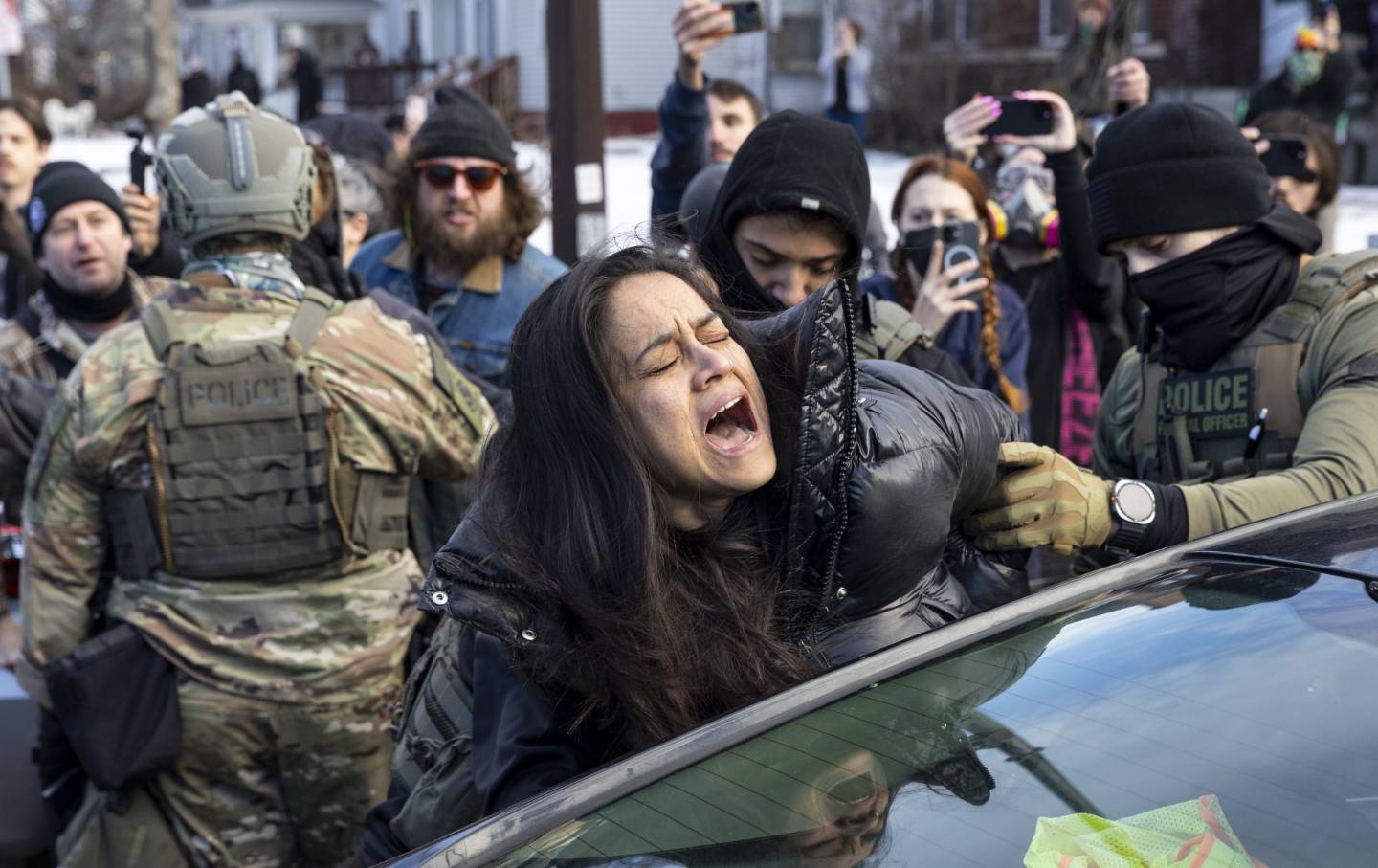
“They laughed at me and told me this wouldn’t have happened if I was a ‘normal’ human being,” Aliya Rahman tells The Nation.
The former New York Times columnist is a one-man cottage industry of lazy cultural stereotyping.
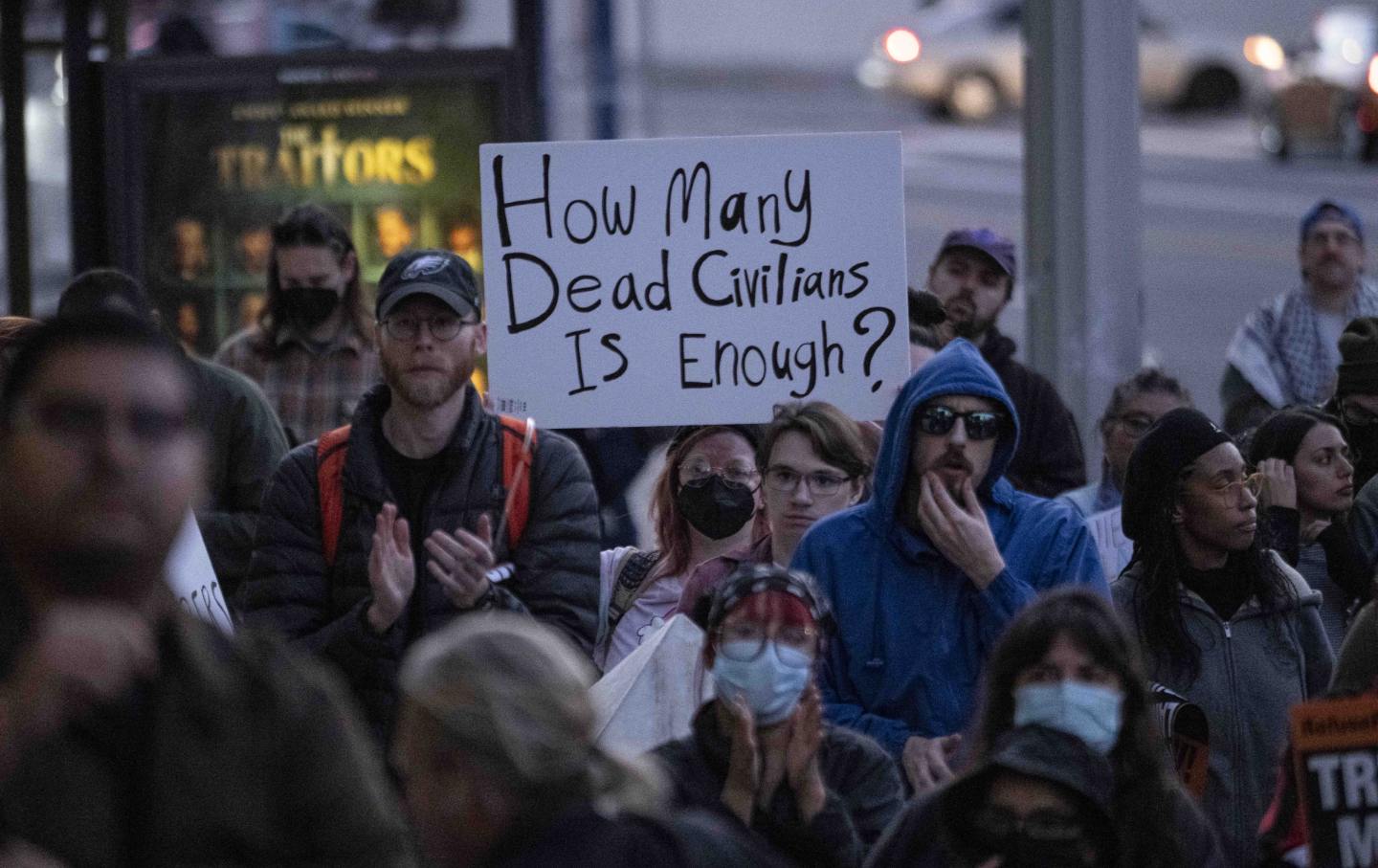
Thinking of political violence solely as a safety issue is not enough to address the harm that follows. “The patient is the community.”
