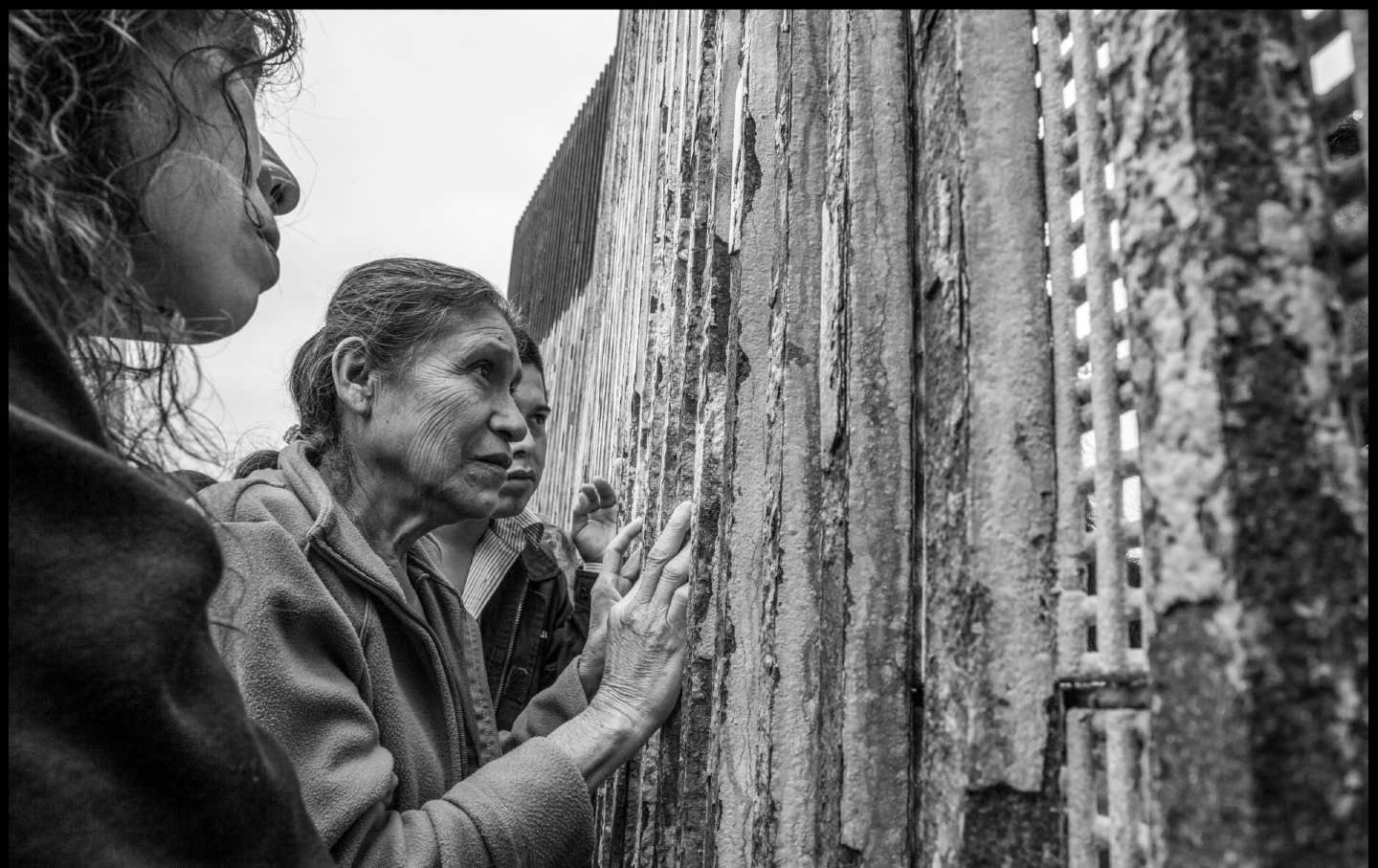
Why we need a freedom agenda.
The night Zohran Mamdani was elected mayor of New York City, he called his triumph “the victory of the Bangladeshi aunty who knocked on door after door until her feet throbbed and her knuckles ached … of the Gambian uncle who finally saw himself and his struggle in a campaign for the city that he calls home.” Countering arguments that defending immigrants is an election loser, incompatible with fighting for jobs and living standards of all workers, Mamdani answered, “Dreaming demands solidarity … A life of dignity should not be reserved for a fortunate few. … We can be free and we can be fed.”
“We can be fed” is a call not just for municipal grocery stores but for attacking the corporate domination that keeps workers hungry and angry. To win an election, he says, candidates must defend workers’ class interests. But he combines this with “We can be free,” which means ending raids and detentions. Divided families hear that call, and white workers with German or Italian surnames should remember it from Ellis Island more than a century ago. On Angel Island in San Francisco Bay, those held in detention by racist anti-Chinese restrictions heard it too. It was a call to bring families together here, in the US
Mamdani’s embrace of immigrants recognizes a basic reality. Modern migration is the product of the exploitation of immigrant-sending countries, and of wars that are both a legacy of colonialism and an effort to keep a neocolonial system in place. Enforced debt, low wages, and resource extraction produce displacement and migration, but also make countries attractive to investors. They relocate production, taking advantage of the vast gulf created in the standard of living between the global south and the global north.

This system criminalizes all people who are displaced—migrants certainly, but also the unemployed and homeless who lose jobs in rich countries. Workers are pitted against each other, and political defenders of the system use this competition to keep them from changing it.
Militarism is the enforcer, whether ICE on the border and in immigrant communities, or armed intervention abroad and the threat of it. Immigrant workers suffer as a result, but so do workers in general. Huge budgets for ICE and “defense” soak up money for meeting social needs.
Immigrant communities and unions call instead for a freedom agenda: for family reunification and legal status for people already here; for labor rights for immigrant workers; and for ending mass detentions and deportations. Migrants who depend on work in the US want to make legal migration possible, but without being forced into corporate guestworker visa programs. Those communities also seek political and social change at home, and an end to treaties like NAFTA, so that migration becomes voluntary, not a choice forced by hunger and poverty.
During the Cold War, Chicano and Asian American communities endured the greatest wave of deportation in history (1.1 million in 1954) and the largest recruitment of braceros (450,000 in 1955). Because the left had been expelled from most US unions as the Cold War began, the dominant right-wing ideology in many unions was hostility to immigrants. Eventually, that led to support by the AFL-CIO for the 1986 Immigration Reform and Control Act.
That law included a limited legalization for some undocumented people, but it also included poison pills that provoked fierce opposition by a new wave of left-wing unionists and immigrant community activists. The law’s worst feature—employer sanctions—made it a crime for an employer to hire a worker without papers, and for that person to work. The AFL-CIO supported the bill, asserting that if undocumented immigrants couldn’t legally work, they wouldn’t come, and those here would leave.
Current Issue
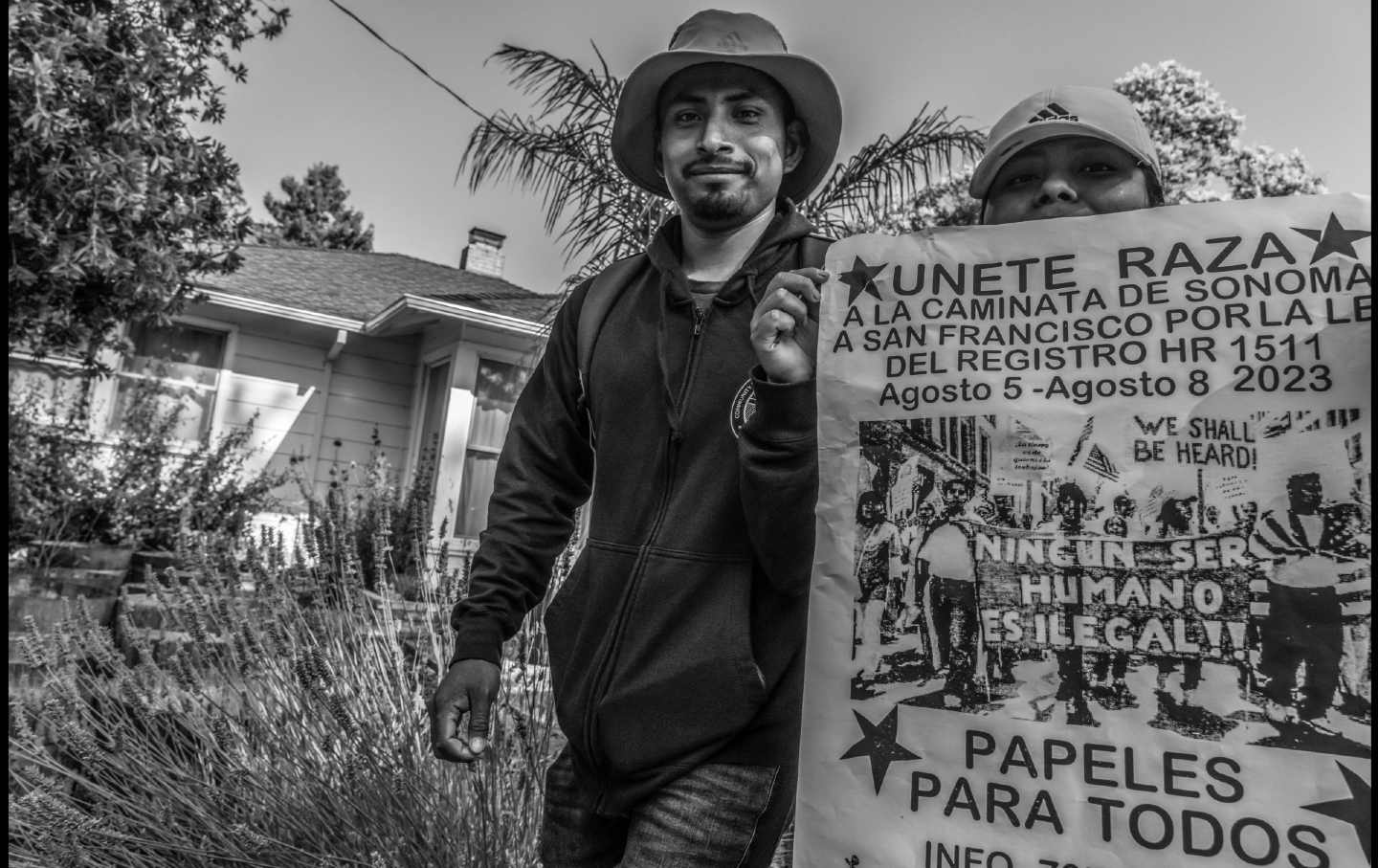
Activists like Mike Garcia, who became a national leader of the janitors’ union, warned it would be used to make immigrant workers vulnerable to retaliation—and it did. When Garcia’s union organized janitors cleaning buildings for Apple, Hewlett-Packard, and other tech companies in the early 1990s, many were fired. Similar examples multiplied. Making immigrant workers more vulnerable only made organizing harder. Workers’ standard of living did not go up.
Labor opposition to the law grew, and in many unions immigrant workers became organizers and officers. Finally, in 1999, the AFL-CIO convention in Los Angeles called for repealing sanctions, for another immigration amnesty, and for ending guestworker programs. Many immigrant communities began looking at unions as defenders, and union organizing among immigrants mushroomed. Despite raids and firings under both Democratic and Republican administrations, the political alliance of immigrants with the communities around them has become an engine for social change.
In Los Angeles’s civil-rights upsurge of the 1960s, the student and antiwar movements among Chicanos became a bedrock for workplace organizing. Many leaders from the left—from Bert Corona to Maria Elena Durazo—fought to get the labor movement to accept the growing movements of undocumented workers. Political change, they argued, comes through their alliance with African American and white workers.
When Governor Pete Wilson won his 1994 campaign on an extreme anti-immigrant platform, the cost was high. Hundreds of thousands of immigrants became naturalized citizens, and with their native-born children they became voters. Non-citizen union members went door to door urging support for political candidates they couldn’t vote for themselves, as they’ve done in every election since.
Popular
“swipe left below to view more authors”Swipe →
Their alliance was sometimes difficult, but together they transformed Los Angeles’s city politics. The bastion of the open shop has become one of the country’s most progressive city governments, with an African American mayor from the left and four DSA members on the city council.
The basic political dynamics underlying change in other California cities are similar. The most powerful union in San Francisco today is Unite Here Local 2, where a Chinese and Latino majority of hotel workers share power with smaller numbers of Black and white members. Their enemies today are Silicon Valley billionaires like Peter Thiel, who spend vast amounts of money on municipal elections. Many of the groups doing the fighting are based in immigrant communities, working in broad labor formations like Jobs with Justice that ally them with unions and workers across the board.

This is not a simple-minded argument that changing demographics is destiny. Immigrant radicalism has changed this country’s politics throughout its history. And while California has always had a working class with a large percentage of immigrants, most states have a history of immigration as well. In the Midwest and South, similar alliances are becoming more important politically. The current raid regime is driving support for them, rather than the hostility and division Trump and Stephen Miller hope for.
In Omaha, Nebraska, and many small meatpacking towns, the number of Mexican immigrants has increased substantially in the last three decades. ICE raided one company, Glen Valley Foods, earlier this year and threatens to build the Cornhusker Clink, while the state is building its own detention center.
Last year, Margo Juarez, born and brought up in Omaha, was elected to Nebraska’s unicameral state senate, its first Latina, representing the historic South Omaha barrio. After the Glen Valley raid, she visited the detainees in detention, and emerged in tears after talking with women who had decided to self-deport to Mexico, leaving their US-born children behind. She then made an unannounced attempt to inspect the Cornhusker Clink and slammed Governor Jim Pillen and US Senator Pete Ricketts for supporting ICE’s raids.
Juarez is a Democrat, but in 2024 Dan Osborn, a strike leader who jettisoned the Democratic Party, almost beat Republican Deb Fischer for senator as an independent. Now he’s running against Ricketts, attacking the corporate money behind him, but also appealing to anti-immigrant voters with an ad offering to help Trump build the border wall. Even in conservative Nebraska, however, the room for this kind of campaign is shrinking. In rural meatpacking towns, immigrants are now sometimes the majority, and their children will soon be voters.
Meanwhile, the UFCW has mounted organizing drives whose success depends on uniting meatpacking workers across the lines of race and nationality. Nebraska was once a stronghold of the CIO’s radical Packinghouse Workers, and could rediscover its radical roots in a new era. Campaigning by telling immigrants that they are not part of Nebraska’s working class is a strategy that puts a progressive future in jeopardy, not one that brings it closer.

In rural North Carolina, the same tables are turning. The huge Smithfield slaughterhouse in Tar Heel was organized a decade ago after a battle of almost two decades. That victory began to seem possible when immigrant Mexican workers stopped the lines and marched in one of the huge May Day rallies of 2006. African American workers, seeing their action, then shut the plant to demand a holiday for Rev. Dr. Martin Luther King Jr.’s birthday. Many Mexicans were driven from the slaughterhouse in mass firings and raids, but that in-plant alliance and broad community support finally won a union contract.
This fall, when notorious Border Patrol head Greg Bovino terrorized Charlotte’s streets with bands of militarized agents, community activists formed a broad network to monitor their movement, calling their immigrant-protective effort “Bless Your Heart.” As Alain Stephens of The Intercept recounted, when the Border Patrol moved into Appalachia, agents were met with organized hostility in Harlan County, famous in labor history for its militant coal strikes. In rural Boone, after agents picked up workers at two Mexican restaurants, 150 local people held signs saying “Time to Melt the ICE!”
ICE has announced it will continue targeting Southern communities, with raids in Mississippi and Louisiana called Swamp Sweep, and in New Orleans called Operation Catahoula Crunch. Here too they’ve met community opposition. Even in conservative areas, the raid regime is closing the political space for campaign formulas attacking corporations while restricting immigration.
Bernie Sanders slammed the Democrats after the 2024 election, accusing them of abandoning the working class, and many workers know the sorry history. Bush negotiated NAFTA, but Clinton signed it. Obama campaigned on opposing NAFTA while telling Canada he had no intention of changing it. Nevertheless, Democratic Party centrists still argue that candidates in 2026 should attack Trump and corporate economic policies but call for restrictions on immigration and more immigration enforcement.
This was the tactic used by Biden and Harris. Centrist Democrats and Republicans negotiated an immigration bill in 2023 and then campaigned against Trump from the right, attacking him for telling Republicans in Congress not to vote for it. That bill would have made it much harder to apply for asylum. It proposed $3 billion for adding more detention centers to the 200 existing ones run for profit by private companies like the GEO Group (formerly the union-busting Wackenhut Security Company).
A recent New York Times article by Christopher Flavelle, “How Biden Ignored Warnings and Lost Americans’ Faith in Immigration,” argues that these measures weren’t anti-immigrant enough. The proposal responded to a media-driven frenzy that constantly referred to an immigration “crisis,” called the border “broken,” and treated migrants as criminals. Political operatives in Washington then took polls, announcing that the public wanted draconian enforcement, and advised candidates that going against this tide would lead to election losses.
In the end, faced with a choice between Biden-Harris’s and Trump’s rhetoric demonizing migrants, many voters—workers included—opted for the real thing. The strategy cost the votes of large numbers of Latinos, Asian Americans, and immigrant-rights and labor activists. As a strategy for Democrats, it was a bust, and it demobilized the party when Trump used the hysteria to justify even greater immigration terror. Over half the people who voted for Trump cited immigration as their top issue, but only 3 percent of Harris voters did, according to a Navigator post-election survey.

Politically self-interested polling by the media is a trap for progressives, because fighting for social change requires an organizer’s methods. When unions start an organizing drive, they don’t poll workers to find out if a majority supports the boss. Fear of the boss often affects the majority. The organizer’s job is to help people lose that fear, find those workers who want to fight, and build a majority organization to fight with.
Workers are constantly bombarded by false ideas about immigration and immigrants that hold immigrants responsible for everything from poverty and lost jobs to crime. They then hear appeals to support anti-immigrant enforcement. Just as unions do in organizing drives, progressives have to fight on the terrain of ideas, telling the truth about the causes of migration, plant closures, and poverty. To organize for political change, workers have to be convinced to support the rights and welfare of all working people, not just some.
New York City’s election was not a poll. It was a radical education in what’s possible, what workers really want, and who the working class really is. It was an education about capitalism that workers need. As education director for the AFL-CIO, after John Sweeney dumped the cold warriors in 1995, Bill Fletcher tried to meet that need. He developed a program, Common Sense Economics, that unions could use to develop a deep understanding of capitalism—and language for communicating it in the workplace.
Working-class communities need a political education program. Instead, centrists would tell them there’s not enough to go around and urge them to vote for politicians who will make sure they get their share—against other workers. But the future is with Steve Tesfagiorgis, who helped lead Teamsters Local 320 to a contract at the University of Minnesota. “There are more than 600 African immigrant workers at the university,” he says. “Every one of us came to this country afraid. We were told to work hard and keep our heads down. Teamsters for a Democratic Union showed us we can fight back. No one is coming to save us. If we want respect, we need to fight for it ourselves.”
In this time of unrelenting, often unprecedented cruelty and lawlessness, I’m grateful for Nation readers like you.
So many of you have taken to the streets, organized in your neighborhood and with your union, and showed up at the ballot box to vote for progressive candidates. You’re proving that it is possible—to paraphrase the legendary Patti Smith—to redeem the work of the fools running our government.
And as we head into 2026, I promise that The Nation will fight like never before for justice, humanity, and dignity in these United States.
At a time when most news organizations are either cutting budgets or cozying up to Trump by bringing in right-wing propagandists, The Nation’s writers, editors, copy editors, fact-checkers, and illustrators confront head-on the administration’s deadly abuses of power, blatant corruption, and deconstruction of both government and civil society.
We couldn’t do this crucial work without you.
Through the end of the year, a generous donor is matching all donations to The Nation’s independent journalism up to $75,000. But the end of the year is now only days away.
Time is running out to have your gift doubled. Don’t wait—donate now to ensure that our newsroom has the full $150,000 to start the new year.
Another world really is possible. Together, we can and will win it!
Love and Solidarity,
John Nichols
Executive Editor, The Nation
More from The Nation

The toll is staggering: In 2024, gun violence in the US resulted in 40,886 deaths and 31,652 injuries.

Plutocrats, pundits, and government officials joined together in a racist smear campaign against a queer Palestinian student at Brown University.
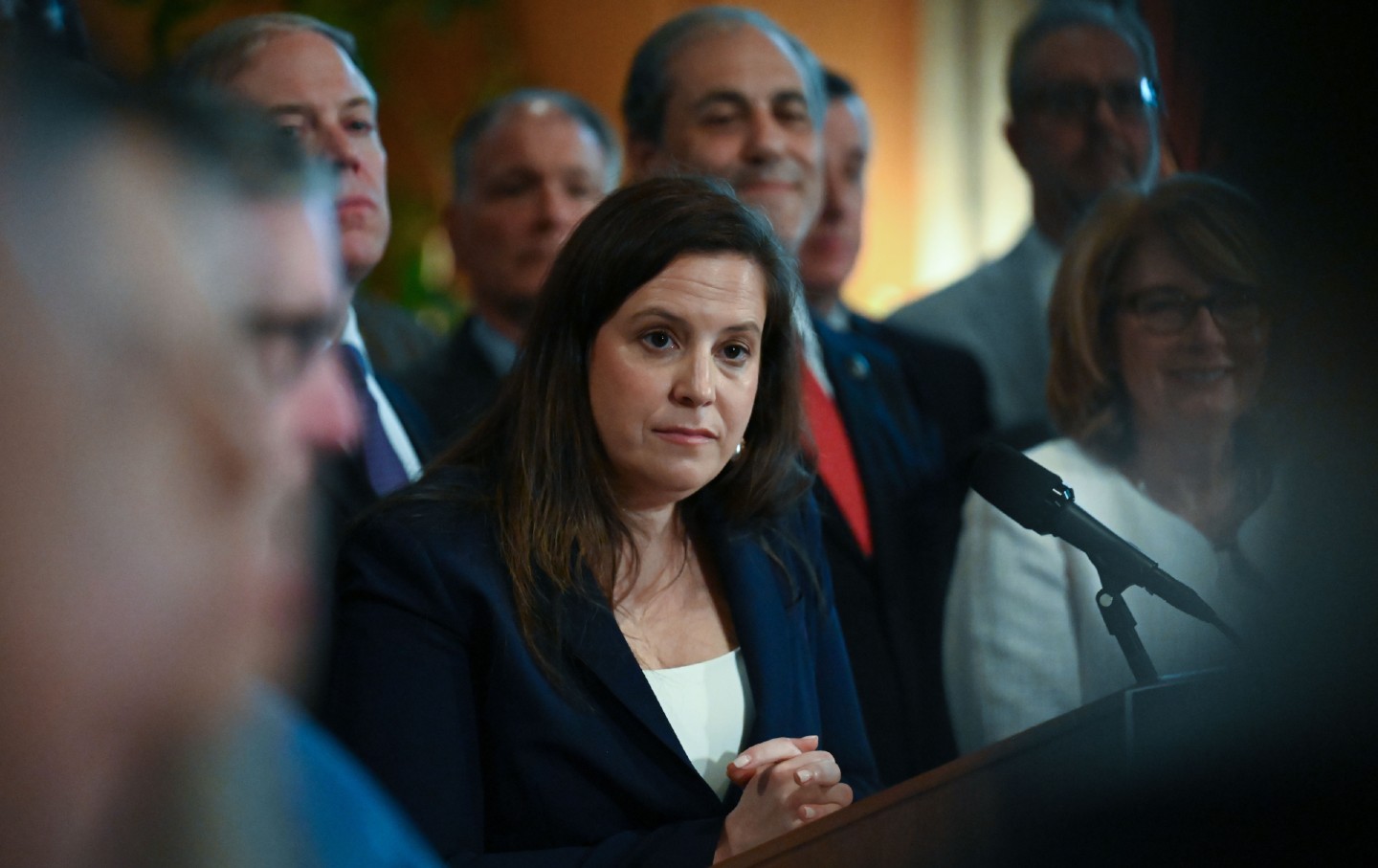
Elise Stefanik is just the latest top Republican deciding against running in the 2026 midterms.
