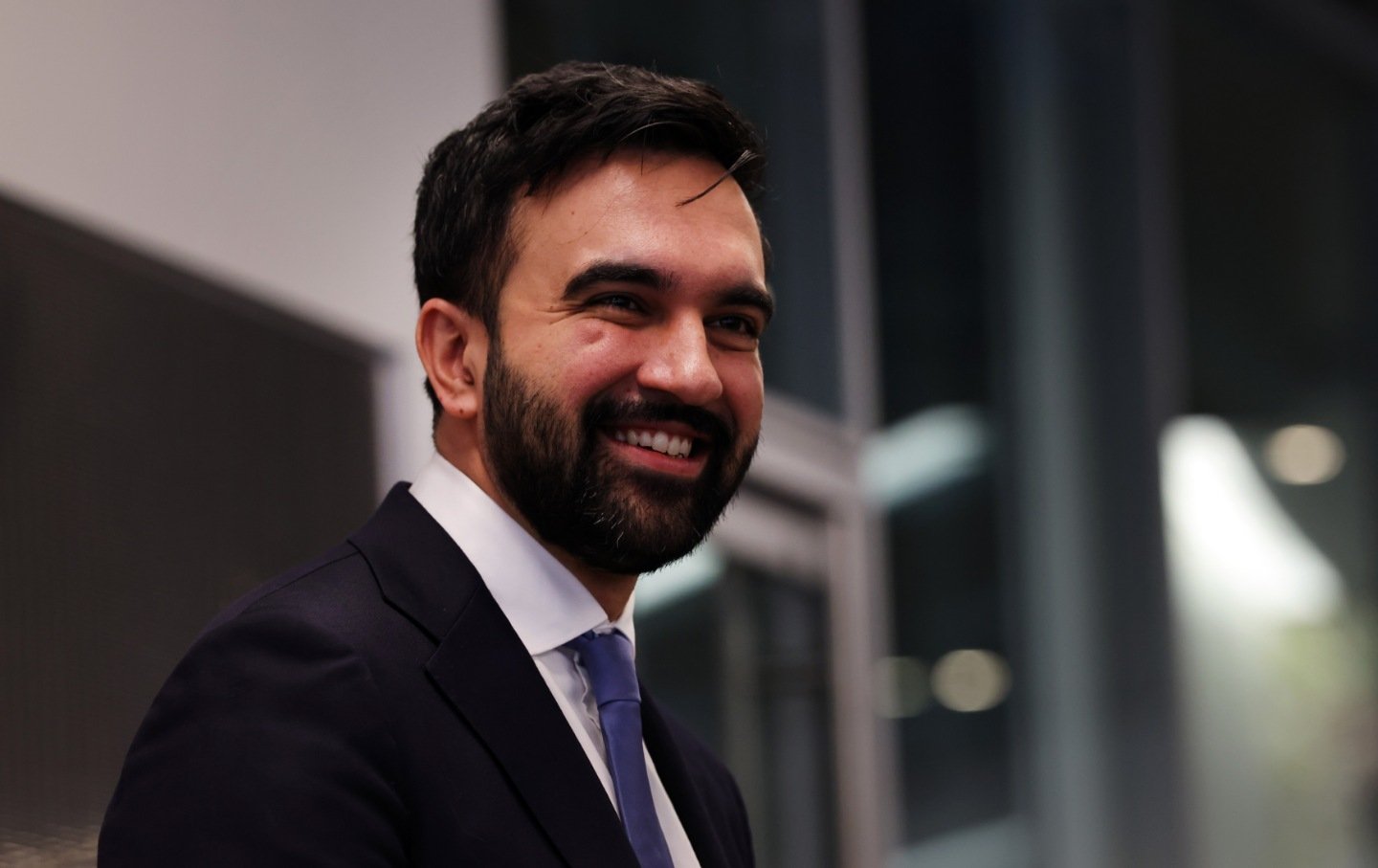
In an exclusive interview with The Nation, the mayor-elect goes behind the scenes of his meeting with the president and talks about some of his political heroes.
Zohran Mamdani won’t become New York City’s mayor until January 1, but there is already immense pressure on him to achieve great things. Yet the 34-year-old democratic socialist, who will be the city’s youngest mayor since Hugh John Grant served in the late 19th century, shows few signs of being overwhelmed. In fact, in a new conversation with The Nation, Mamdani spoke of his determination to make bold and unexpected moves both to protect New Yorkers from economic and political threats and to directly improve the circumstances of the people whose votes have given him a headline-grabbing mandate and turned him into something of a political superstar.
The boldness of Mamdani’s postelection approach has extended to talking with ideological opposites—as he did in his high-profile November meeting with Donald Trump at the White House, and in a less widely reported follow-up phone conversation between the two. Trump’s respectful response to the outreach from the incoming mayor who, just weeks before the two met, had referred to the president as “a despot,” shocked pundits and politicians—including a good many Republican candidates and strategists who had attacked the mayor’s left-wing policies and were suddenly hearing their party’s leader suggest that he “really would” be comfortable living in a city led by a proud democratic socialist.
Mamdani told me that he went into the White House meeting with a clear understanding of the differences he has with Trump, whom he decried throughout much of the 2025 campaign as “a fascist” and who, in turn, referred to Mamdani as a “100% Communist lunatic.”
The mayor-elect knew that a long string of political figures from the US and around the world had been dressed down, embarrassed, and attacked by the president during White House meetings. He also knew that, while he would be civil to Trump, he would not disavow his deeply held progressive beliefs, nor minimize their fundamental ideological differences.
Current Issue
“I prepared for many different kinds of a meeting,” Mamdani explained. “I was hopeful through it all that it would be a productive one, but I knew that there were many different kinds of possibilities in what that meeting could hold. And, you know, a few months ago on the campaign trail, a reporter had asked me for three words to describe myself, and I told them ‘New York City.’ And I kept coming back to that as what the focus of the meeting [with the president] needed to be. Because, oftentimes, when politicians meet, the conversation rarely extends beyond either of them. And if you can in fact focus the meeting on a place of shared interest and love and purpose, then it has the potential to unlock what could be incredibly important for working-class New Yorkers across the five boroughs. And this is an importance that can be felt not only in their ability to afford to live in New York City, but also that they be safe in New York City. And that was much of what was guiding me as, as I was preparing for the meeting [with Trump] and thinking about it.”
To keep the focus of the meeting on New York City, specifically, and on affordability issues more broadly, Mamdani recalled, “I told the president that, while my campaign began on October 23rd of 2024, there were far more people who became aware of it after the president won [the 2024 election] because of a video where I went to interview New Yorkers in two of the neighborhoods that saw the most significant swings towards the right—Fordham Road in the Bronx and Hillside Avenue in Queens. I told the president that when I asked these New Yorkers who they voted for and why, I heard from them again and again that they voted for Donald Trump and they did so because of the cost-of-living crisis, and out of a desperation for relief, whether it be through the form of cheaper groceries, or a return to what they remember being able to afford four years prior; whether it be their rent or their childcare or their utilities.” The mayor-elect said he spoke of “finding that, amidst the strong and serious disagreements that [he and the president] have, there is a shared analysis on the way in which the cost of living crisis is pushing New Yorkers and Americans to the brink, and how the opportunity that we have in this moment is to address it—and in doing so, to deliver a new kind of politics.”
At the heart of this politics, for a tremendous number of voters, said Mamdani, is “a recognition that the system of politics as we know it is broken, and it is one that has left people behind.” That’s a message that he said he sought to impart when he talked with Trump.
The White House meeting was generally viewed as a significant and successful one, especially for Mamdani, who must use every opening to protect New Yorkers in a period that has seen the Trump administration threaten local officials (including the mayor-elect), propose to hold up financial aid to urban centers, and launch vile assaults on immigrant communities in many of America’s largest cities.
Mamdani has been a stark critic of Trump’s policies (especially on immigration issues, civil liberties, and foreign policy) and told The Nation that he will “absolutely” maintain that critique. Indeed, since the session with Trump, Mamdani has been as outspoken as ever in public appearances—and on social media with detailed “Know Your Rights, Protect Your Neighbors” messages for vulnerable New Yorkers. “Honesty has to be at the heart of every relationship,” he explained to The Nation, “and I will continue to always be honest about my principles, my beliefs, and at the heart of it is always thinking about the welfare of New Yorkers.”
Even as commentators continue to discuss the success of the White House session, Mamdani is making no assumptions about what any current cordiality with Trump will mean for the long term. “I am always hesitant to draw far-reaching conclusions,” the mayor-elect said. “What I will say is that [the meeting with Trump] leaves me hopeful of continuing a productive working relationship with the president that is honest about where we disagree and looking for the points of agreement in what could especially be transformative for New Yorkers who are being pushed out of the city that they love.”
That’s a statement rooted in the mayor-elect’s faith in the power of ongoing dialogue—especially with political rivals and critics—and in an understanding of how big-city mayors can and must operate on the national stage.
The governance of great American cities has been so frequently undermined by misguided (and in some cases deliberately destructive) federal and state budget priorities, disinvestment by manufacturing corporations, and neglect on the part of the media that it is easy to forget that America’s mayors were once recognized as heroic figures who inspired not just the cities they served but the entire nation and the world.
There was a time when mayors appeared regularly on the covers of Time , Newsweek, and Life magazines; they were featured in the newsreels that ran before movies; they addressed the people in scratchy radio addresses that were heard with the same enthusiasm as President Franklin Roosevelt’s fireside chats.
That was certainly the case with New York Mayor Fiorello La Guardia, a hero of Mamdani’s who, in the 1930s and ’40s, spoke of making the country’s largest city a platform for “a vital new type of government.” A longtime Republican member of Congress who had been swept from office in the 1932 landslide election that ushered in a period of Democratic dominance in Washington—and, many assumed, in the Tammany Hall machine’s New York City—La Guardia sought the mayoralty in 1933 with a promise to govern to the left of his rivals with “an administration tender hearted toward the weak and unfortunate and hardhearted toward the wrongdoer and the grafter.”
To succeed, La Guardia had to build partnerships with Democrats like Roosevelt, Republicans like crusading prosecutor and eventual New York Governor Thomas Dewey, and even Socialists like Norman Thomas. (The latter alliance was in many ways the easiest, as La Guardia had once mounted a successful congressional reelection bid on the Socialist Party ballot line, and remained close to its leaders.)
La Guardia once argued that “there is no Republican way of cleaning streets any more than there is a Democratic way of putting out a fire. There is no Republican way of building parks any more than there is a Democratic way of maintaining and administering hospitals.” Yet pushing beyond the boundaries of partisanship was risky in the 1930s, as it is now.
Mamdani says he is prepared to take risks if they hold out the promise of a better life for New Yorkers.
Popular
“swipe left below to view more authors”Swipe →
“I think La Guardia showed us the importance of meeting a crisis at its scale. And the only way you can do so is by understanding that it will take everyone in order to fulfill that [mission],” explained the mayor-elect. “I’ve often spoken about my belief that he was the greatest mayor in New York City history. And you cannot tell the story of La Guardia without telling the story of FDR—and the story of the relationship between municipal and federal government.
So it was that, while they were in the Oval Office, Mamdani steered the discussion to Roosevelt’s New Deal presidency—the legacy of which Trump has been attacking on so many fronts. “I actually asked the president that we take a photo in front of the portrait [of FDR] and I spoke about how transformative the New Deal had been for our country and how that is the legacy of politics that I seek to draw upon in the work that I’m doing in New York City.”
It is hard to imagine that Trump got the point. None of the president’s recent actions suggest that he has any inclination to transform from an autocratic billionaire to an FDR liberal.
Mamdani, however, took comfort from the fact that “the president said in the [press] pool that he would not be looking to hurt our city, but rather to help our city. I saw that reflected in his approach to any and all the questions that he was being asked [by reporters, many of them from conservative outlets, who questioned the pair after the Oval Office meeting].”
New York’s mayor-elect expects that the president has at least some “understanding of how this city is one that’s on the precipice of becoming a museum of where working people could once live, as opposed to a living, breathing embodiment of it.” And it bears repeating that Trump did tell the press pool that he could live in a city run by a mayor who everyone knows was elected as an unapologetic democratic socialist.
In fairness, Mamdani recalled, “We didn’t speak much about our differing political ideologies—of myself being a democratic socialist. But we did speak about what it looks like for New Yorkers to be crushed under the weight of this cost-of-living crisis. And so much of my description of myself as a democratic socialist is based on my belief in the importance of dignity for each and every New Yorker—and how that dignity is being stripped of so many across the city through the ever-increasing costs of rent, of childcare, of utilities, and even of public transit.”
That emphasis on dignity extends not only from democratic socialist values but from New York City’s mayoral history, notes Mamdani, who has been thinking a good deal about Fiorello La Guardia of late.
“I often think about his quote, ‘You cannot preach self-government and liberty to people in a starving land.” And I’ve often thought that only by feeding people can you free them,” said the mayor-elect. “The focus in my work is both of those things at once—and how to ensure that we embrace and explore any opportunity to so long as it stands to benefit New Yorkers themselves.”
Over the past year you’ve read Nation writers like Elie Mystal, Kaveh Akbar, John Nichols, Joan Walsh, Bryce Covert, Dave Zirin, Jeet Heer, Michael T. Klare, Katha Pollitt, Amy Littlefield, Gregg Gonsalves, and Sasha Abramsky take on the Trump family’s corruption, set the record straight about Robert F. Kennedy Jr.’s catastrophic Make America Healthy Again movement, survey the fallout and human cost of the DOGE wrecking ball, anticipate the Supreme Court’s dangerous antidemocratic rulings, and amplify successful tactics of resistance on the streets and in Congress.
We publish these stories because when members of our communities are being abducted, household debt is climbing, and AI data centers are causing water and electricity shortages, we have a duty as journalists to do all we can to inform the public.
In 2026, our aim is to do more than ever before—but we need your support to make that happen.
Through December 31, a generous donor will match all donations up to $75,000. That means that your contribution will be doubled, dollar for dollar. If we hit the full match, we’ll be starting 2026 with $150,000 to invest in the stories that impact real people’s lives—the kinds of stories that billionaire-owned, corporate-backed outlets aren’t covering.
With your support, our team will publish major stories that the president and his allies won’t want you to read. We’ll cover the emerging military-tech industrial complex and matters of war, peace, and surveillance, as well as the affordability crisis, hunger, housing, healthcare, the environment, attacks on reproductive rights, and much more. At the same time, we’ll imagine alternatives to Trumpian rule and uplift efforts to create a better world, here and now.
While your gift has twice the impact, I’m asking you to support The Nation with a donation today. You’ll empower the journalists, editors, and fact-checkers best equipped to hold this authoritarian administration to account.
I hope you won’t miss this moment—donate to The Nation today.
Onward,
Katrina vanden Heuvel
Editor and publisher, The Nation
More from The Nation
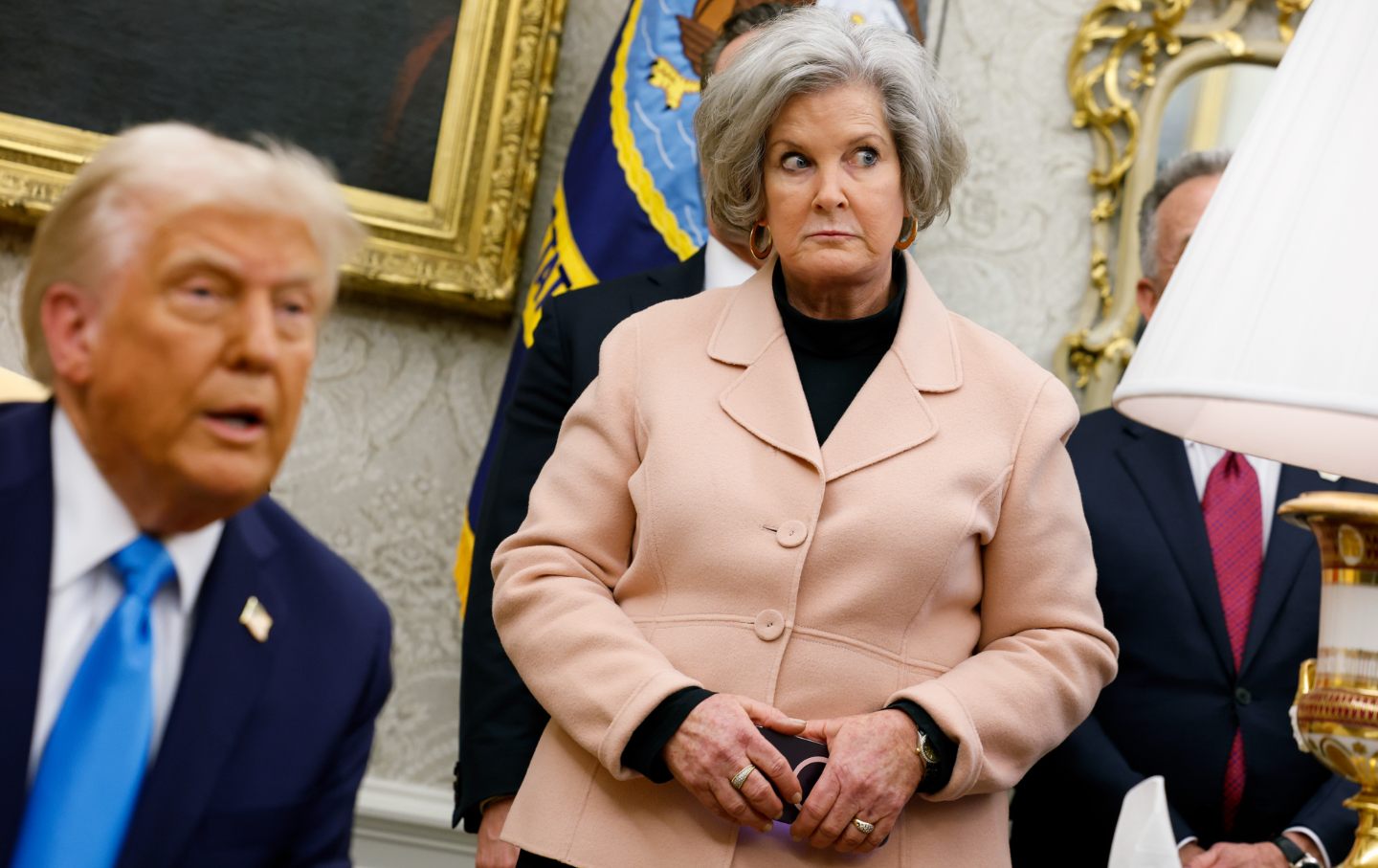
Trump’s chief of staff admits he’s lying about Venezuela—and a lot of other things.
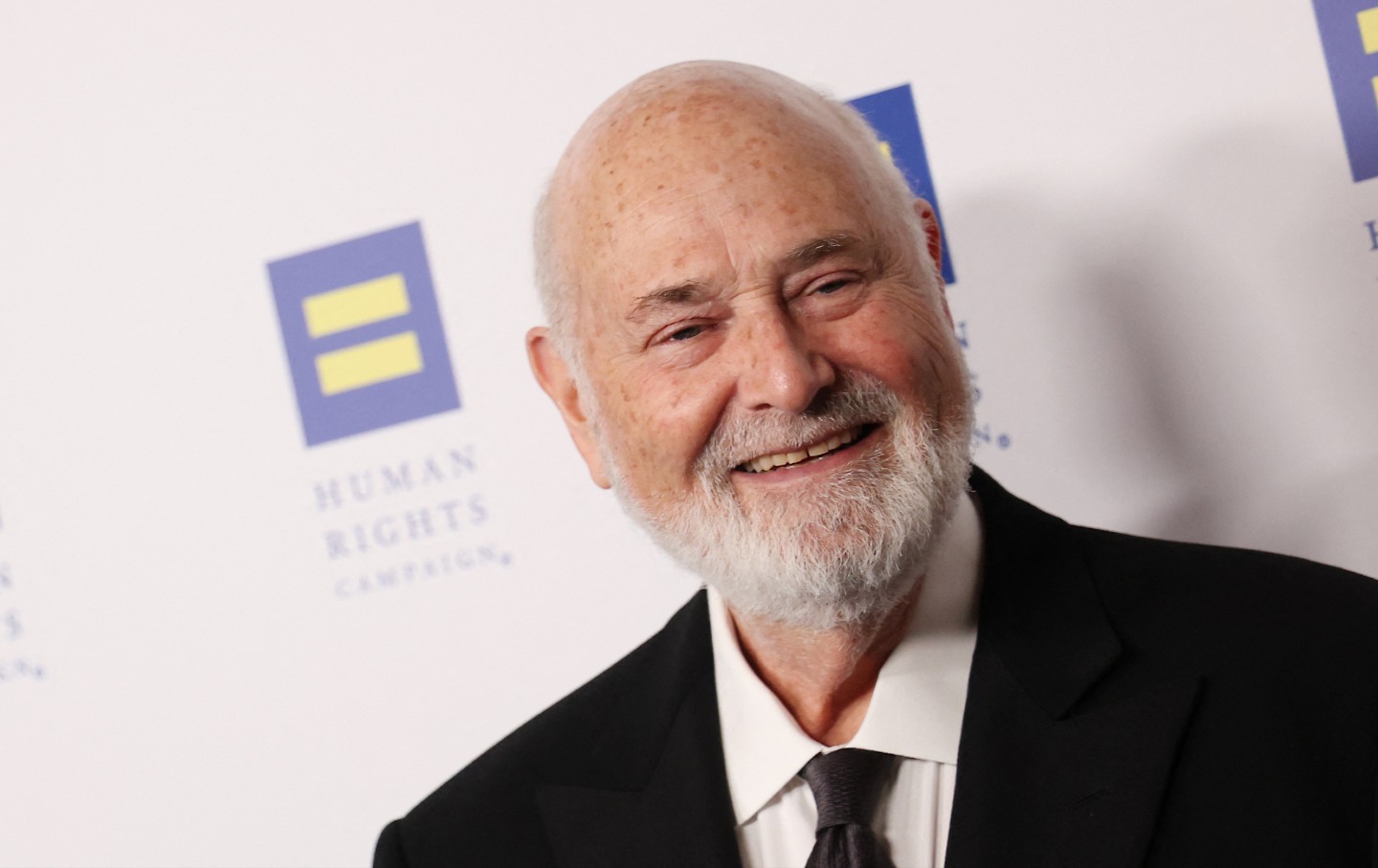
Trump’s crude disdain for the slain filmmaker was undoubtedly rooted in the fact that Reiner so ably used his talents to help dethrone him in 2020.
The president’s usual tricks are no match for a weakening jobs market and persistent inflation.
Every day, Trump is saying and doing things that would get most elementary school children suspended.
